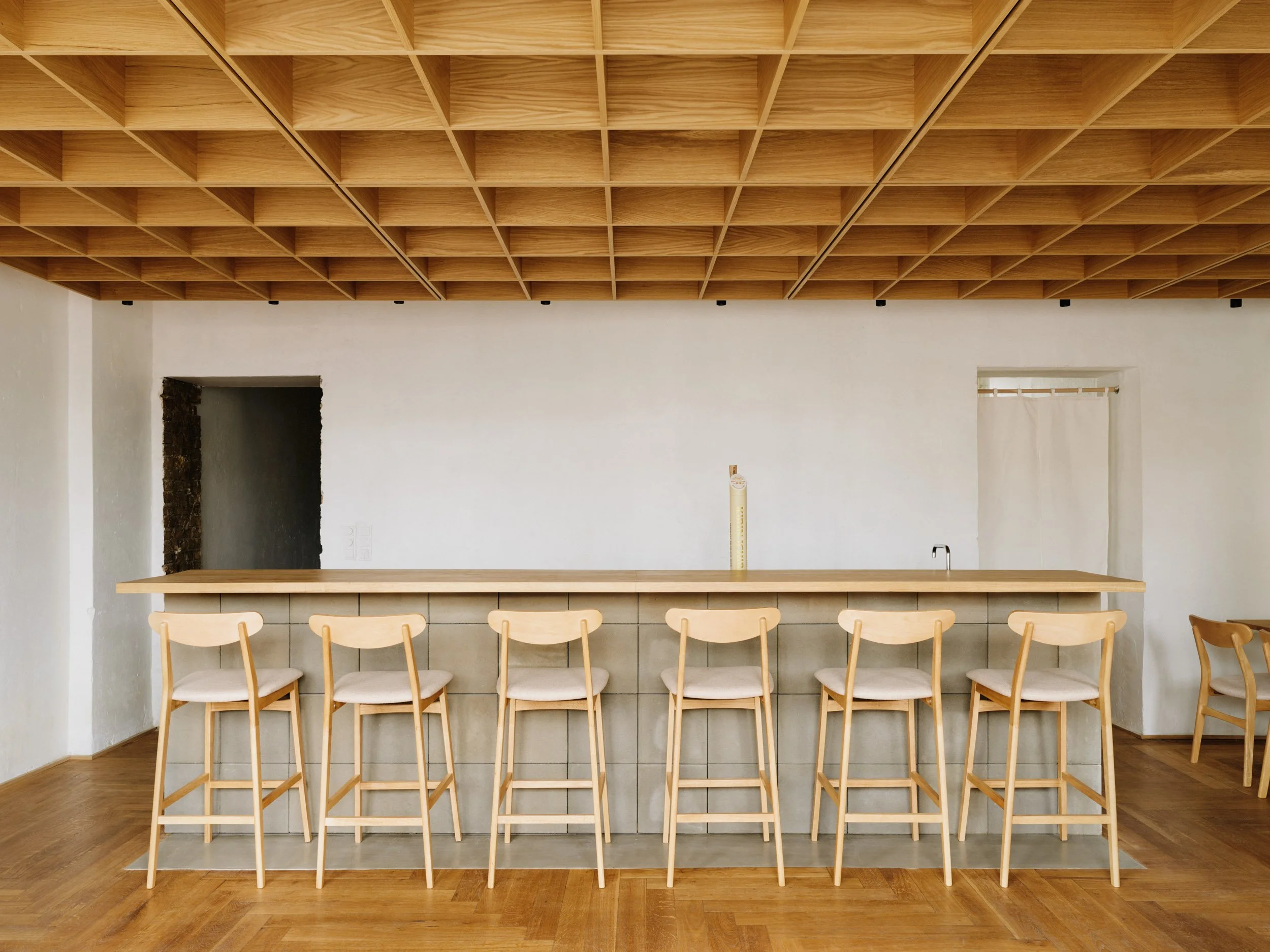
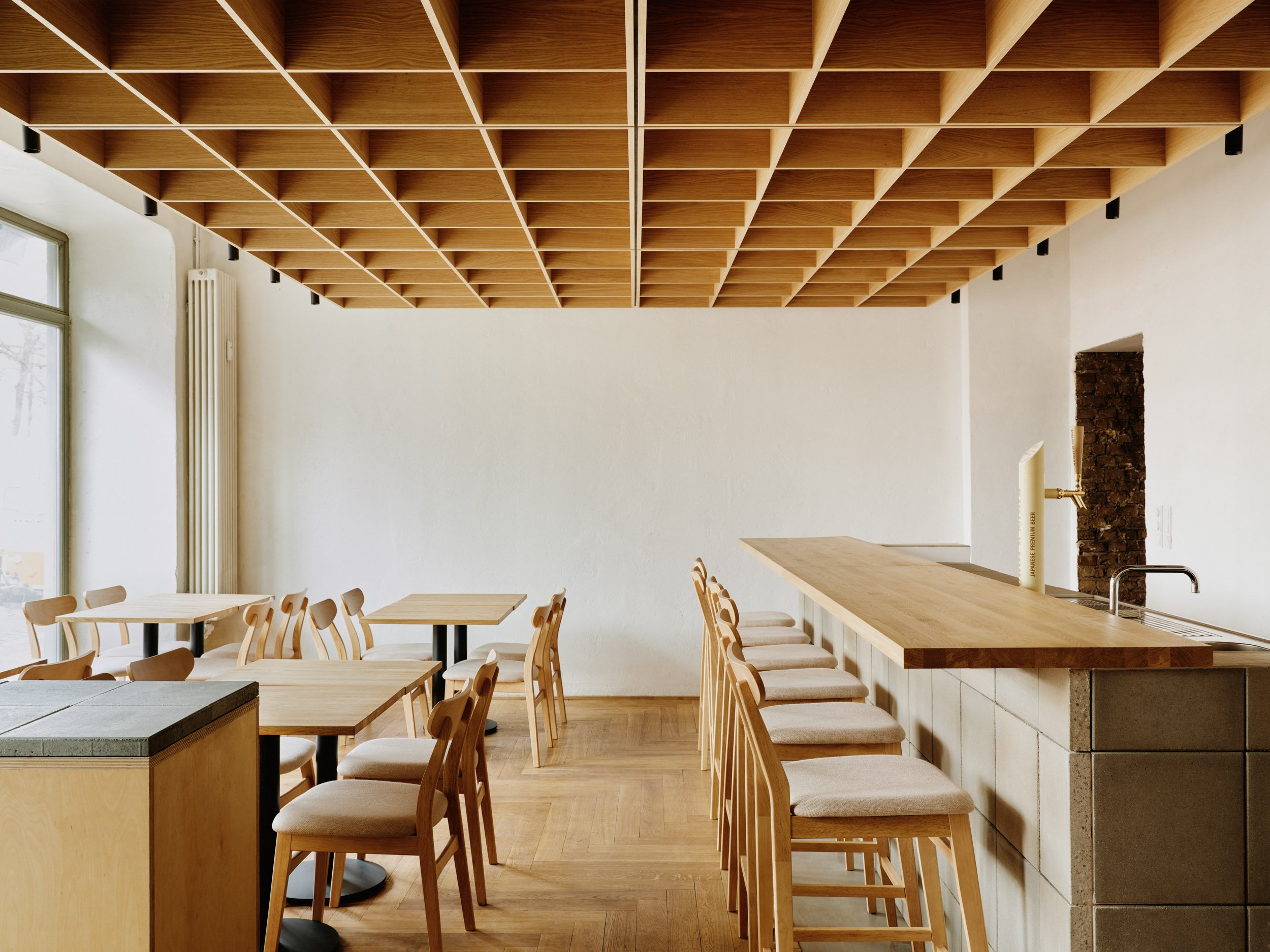
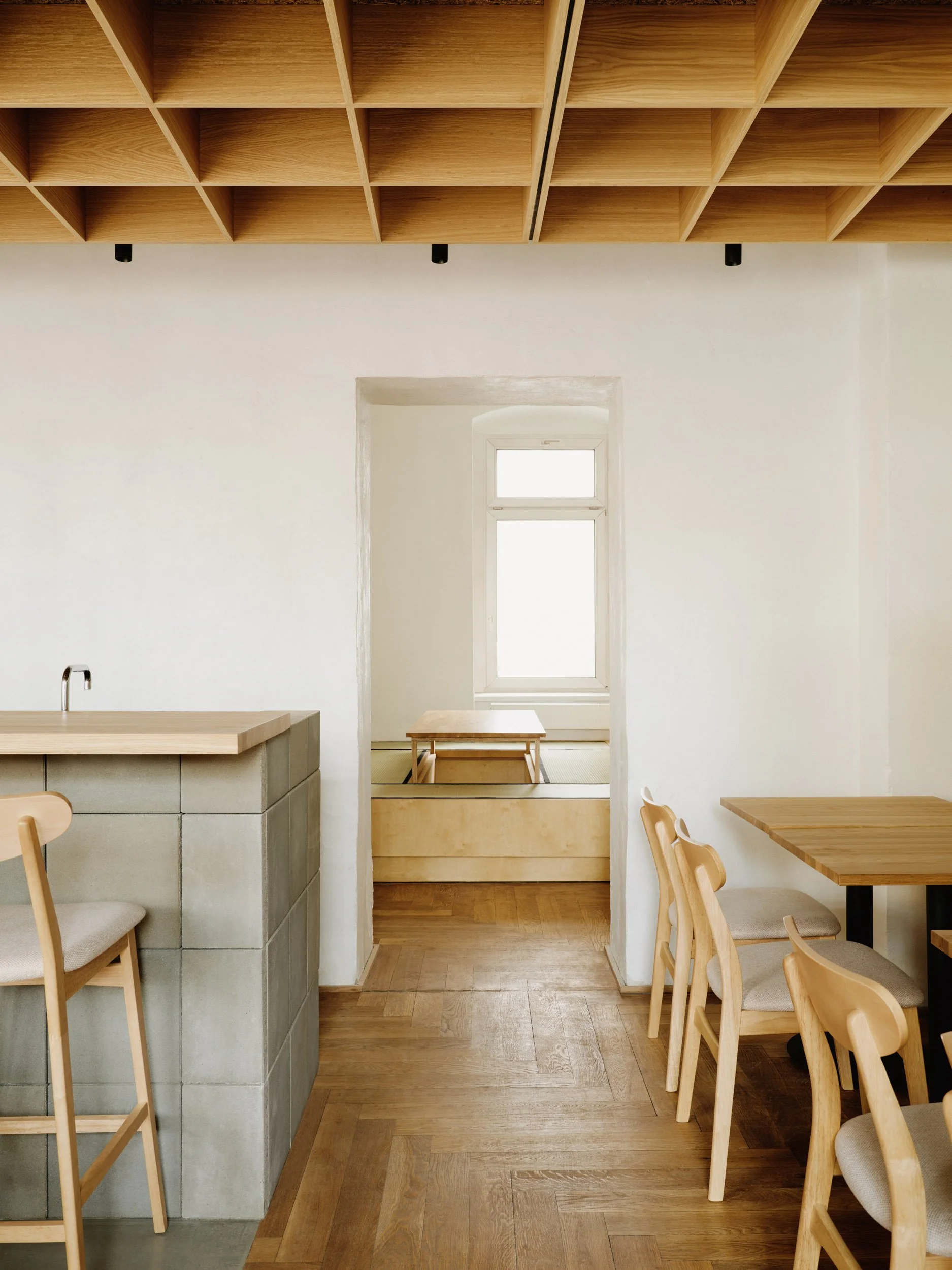
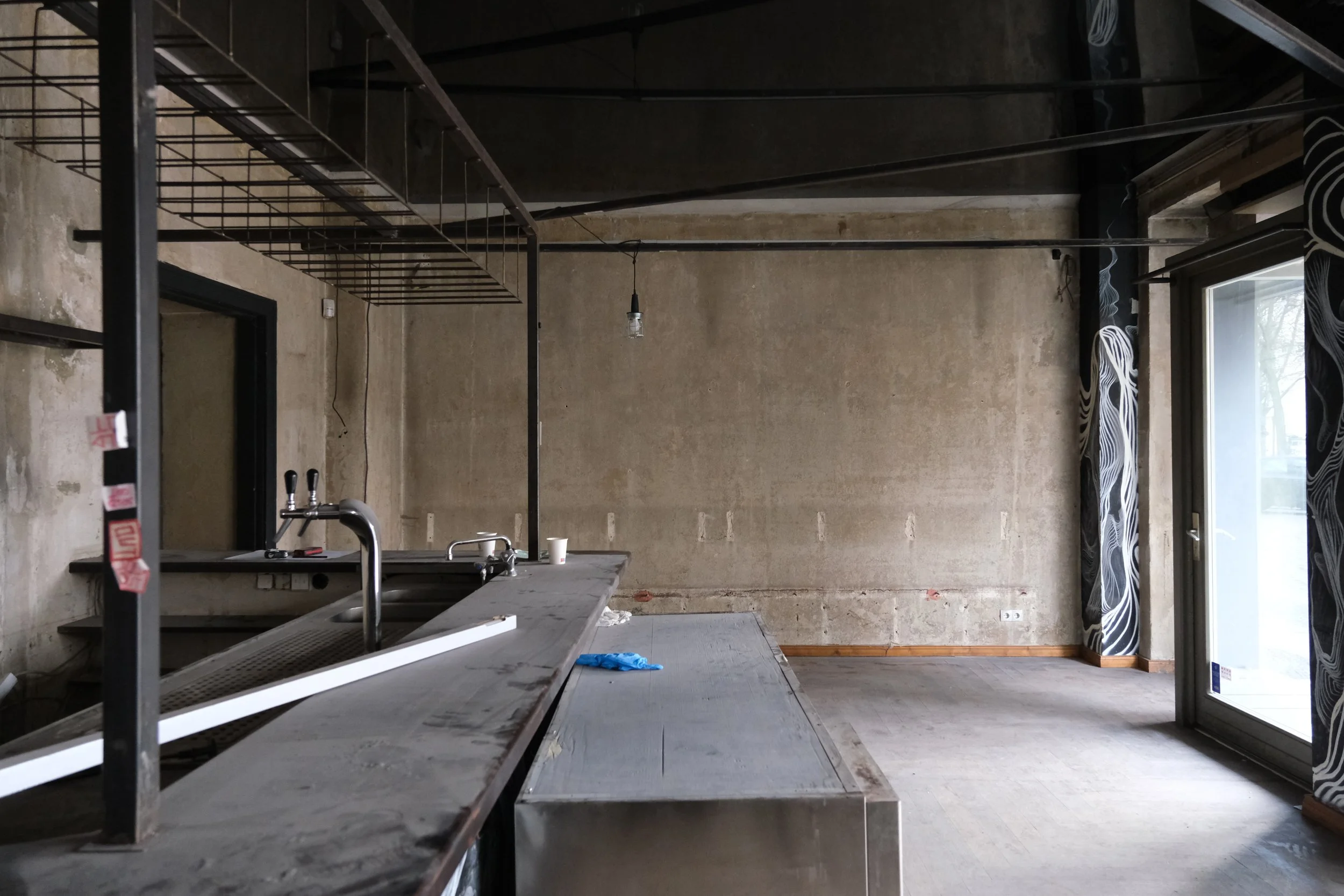
「Tokyo Gohan」は「おにぎり」を中心に据え、その食文化を通して日本と世界を「結ぶ」プロジェクトである。今回はベルリン・フリードリヒスハイン地区に開く日本食レストラン2号店の改修計画に、内装の設計者として加わった。既存地区は Altbau(戦前の集合住宅)が多く残るエリアで、計画地もその一画に位置する。広い間口の向かいには大きな広場があり、通り沿いに並ぶ店舗のファサードが街にリズムをつくり出している。物件は計画前、バーとして使用されており、その客席の全面改修が計画の中心的条件となった。カウンターとテーブル席からなる客席、テイクアウト用カウンターの設置、畳のある小上がり個室、それらのデザイン的な統合あるいは分節、動線の整理などが主な計画要件である。
要件を整理していく中で、「Tokyo Gohan」が目指す全体プロジェクトのコンセプトでもある「結ぶ」ことを、設計思考の拠り所とした。この「結ぶ」は言い換えれば「関係性」である。現代社会において「関係性」は、多くの場合「オンライン」であることを示しているように思える。それは意味の世界に属し、身体性をほとんど伴わず、「人と人とが繋がっていること」自体に価値が置かれる関係性である。建築を通して「結ぶ」ことを考えたとき、こうした「オンライン」の関係性が溢れる中で、物質的・身体的な関係性をあらためて問い直すことには意味があると考えた。この思考プロセスの中で、本計画では「事物と事物の関係性」「事物と人の関係性」「事物を通した人と人との関係性」という三つの関係性を軸に、空間の構成を考えていくこととした。
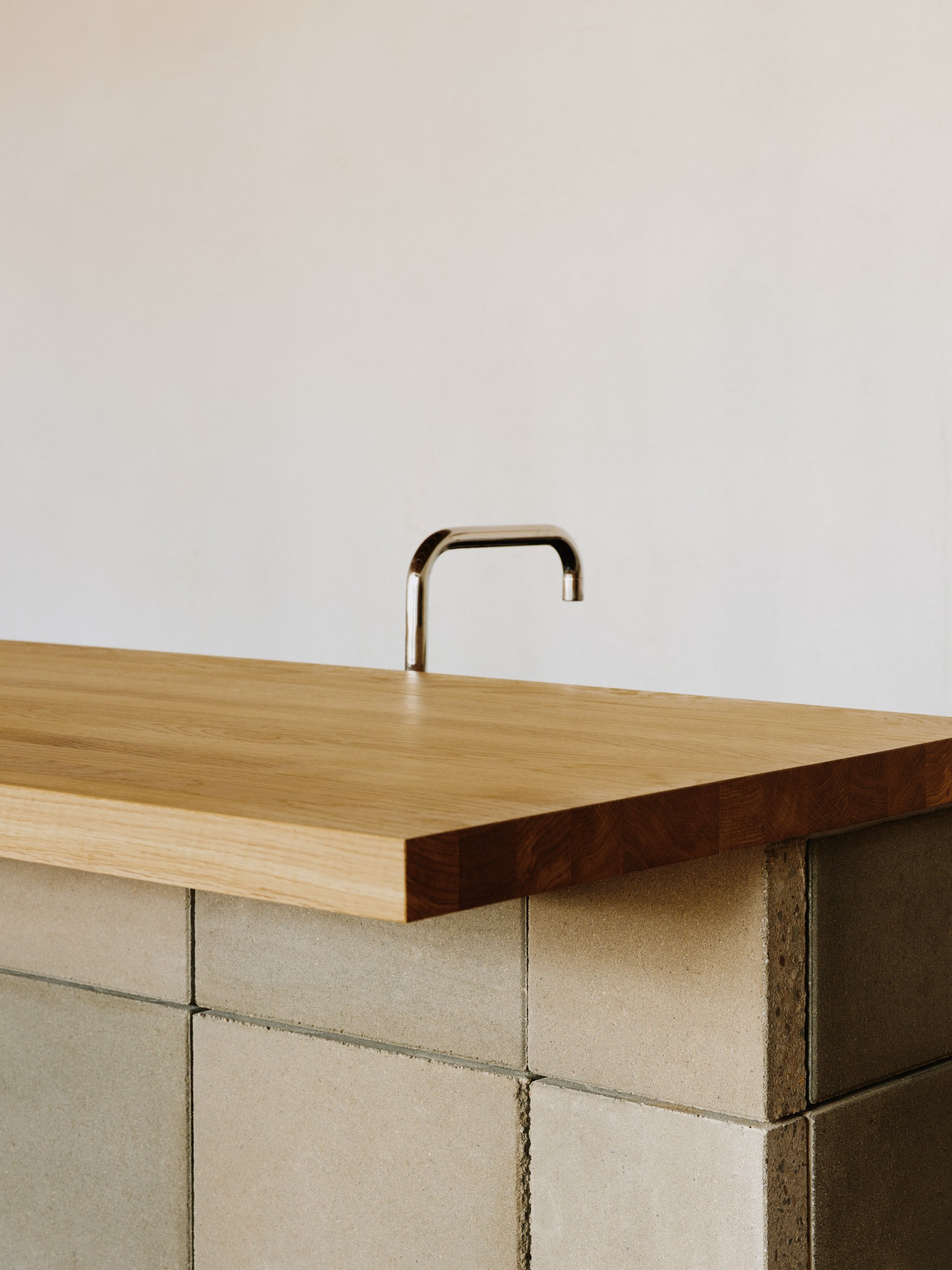
「事物と事物の関係性」において重視したのは、物質そのものの持つ存在感を尊重したうえで、それらを単純に、そしてできるだけ適切に配置することである。それは、おにぎりが最小限の素材の関係性によって構成されながらも、そのわずかな違いによって多様な感覚を生み出すことと、アナロジカルな関係にある。単純でありながら多様な事物の関係性は、空間に有機的で奥行きのある存在感を与えてくれる。
おにぎりは日本人にとってもっともポピュラーな食べ物のひとつであり、その体験は、単純な食材と形態からなる「おにぎり」と人とが「結ぶ」ことで現れる、きわめて原初的な物質的・身体的関係性である。この単純な関係性は、体験が繰り返されることで次第に奥行きを帯びる。あるいは、繰り返しモノと向き合う中で、自らの感覚の同一性や変化に気づくことができる。そうした、単純だからこそ成立する関係性である。「事物と人の関係性」を考えるとき、本計画において最も重要なのは「おにぎり」と「人」との関係である。その中で、空間や建築的エレメントは背景となるべき存在である。素材感や天井高さといったスケールを慎重に設定し、「事物」と「人」とが集中した関係性を築けるよう配慮している。ただし、その体験が繰り返される中で、奥行きの中から空間的な物質が立ち現れてくる。そのような、控えめな物質的存在感を目指した。
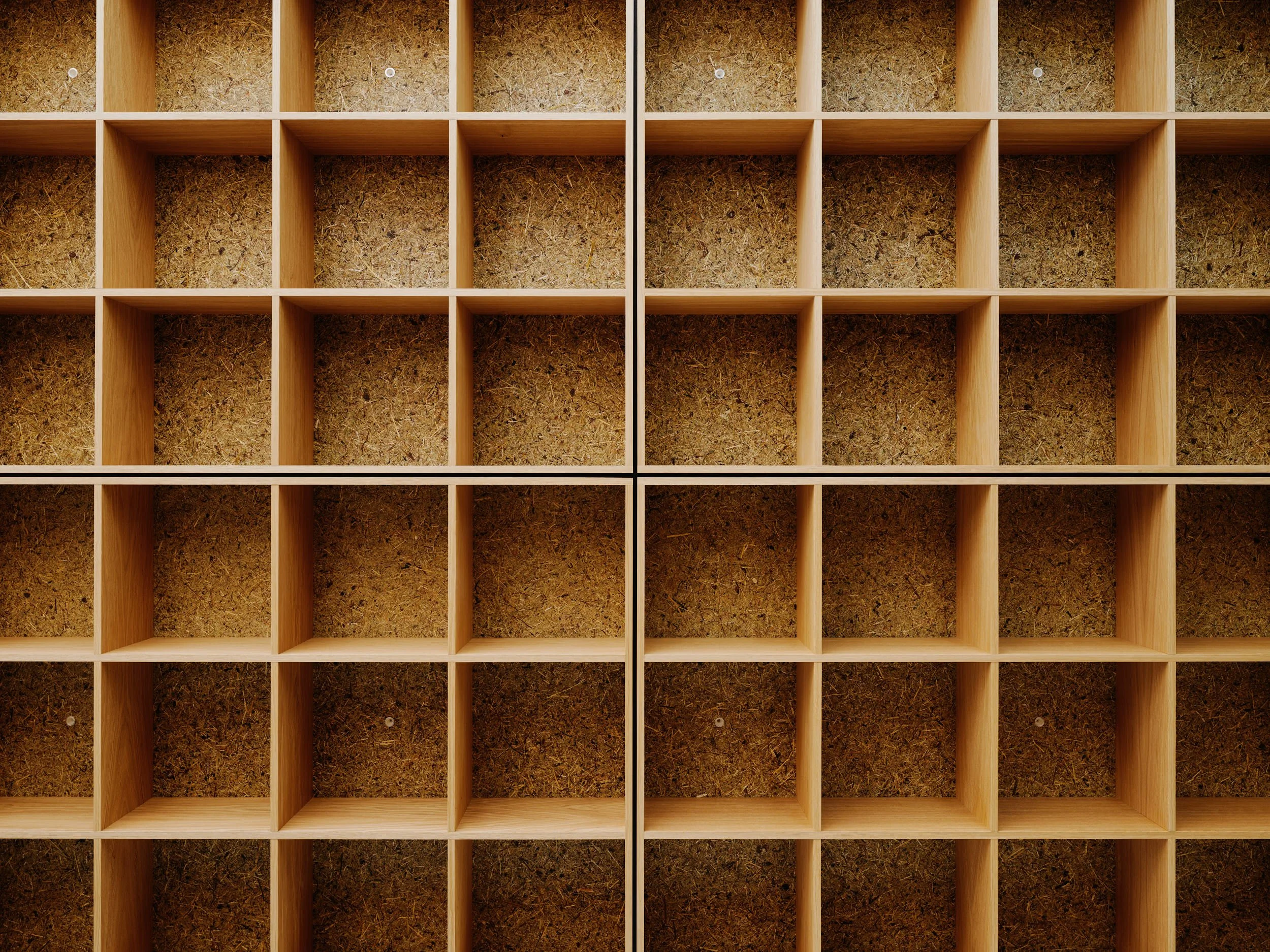
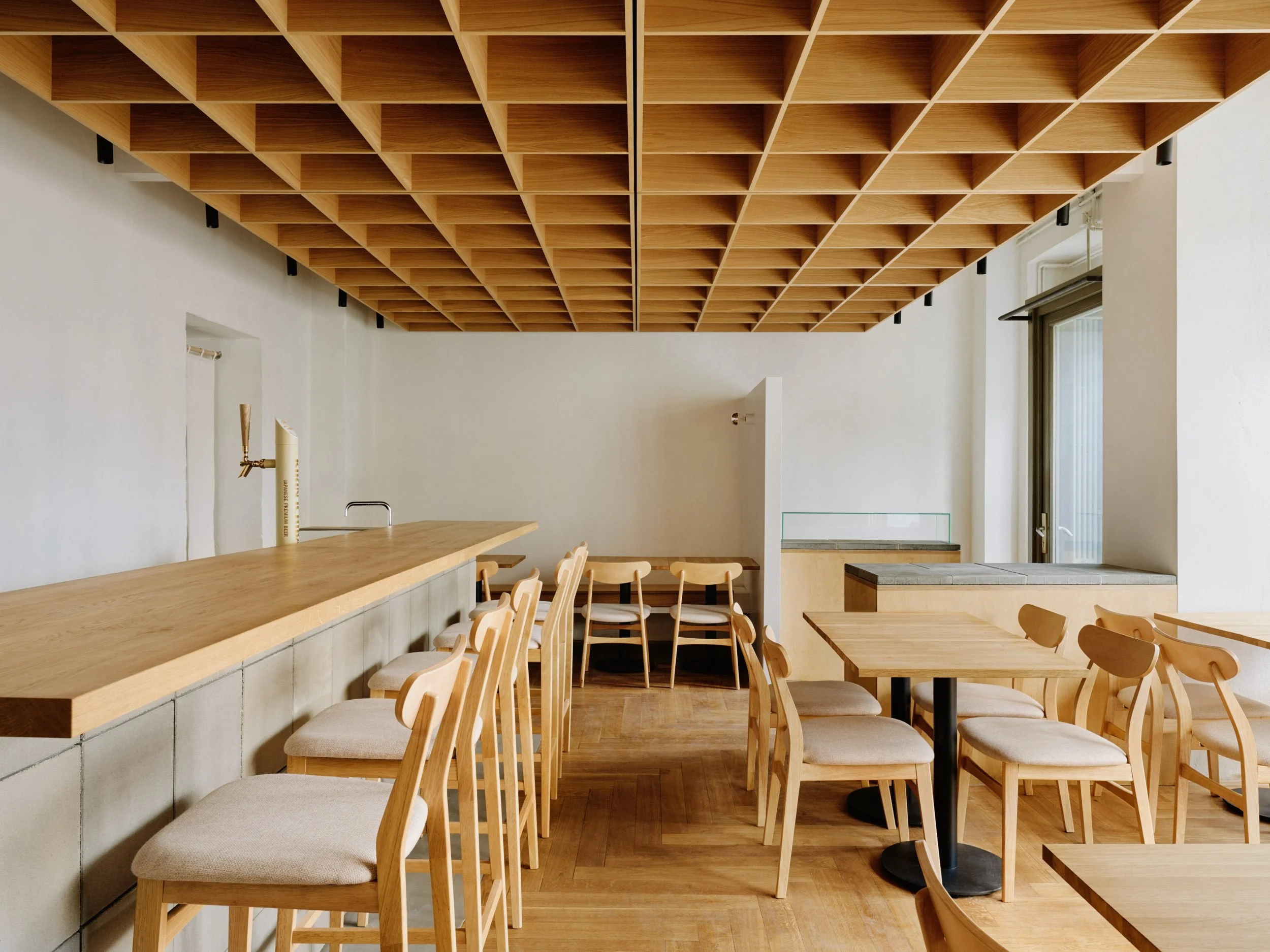
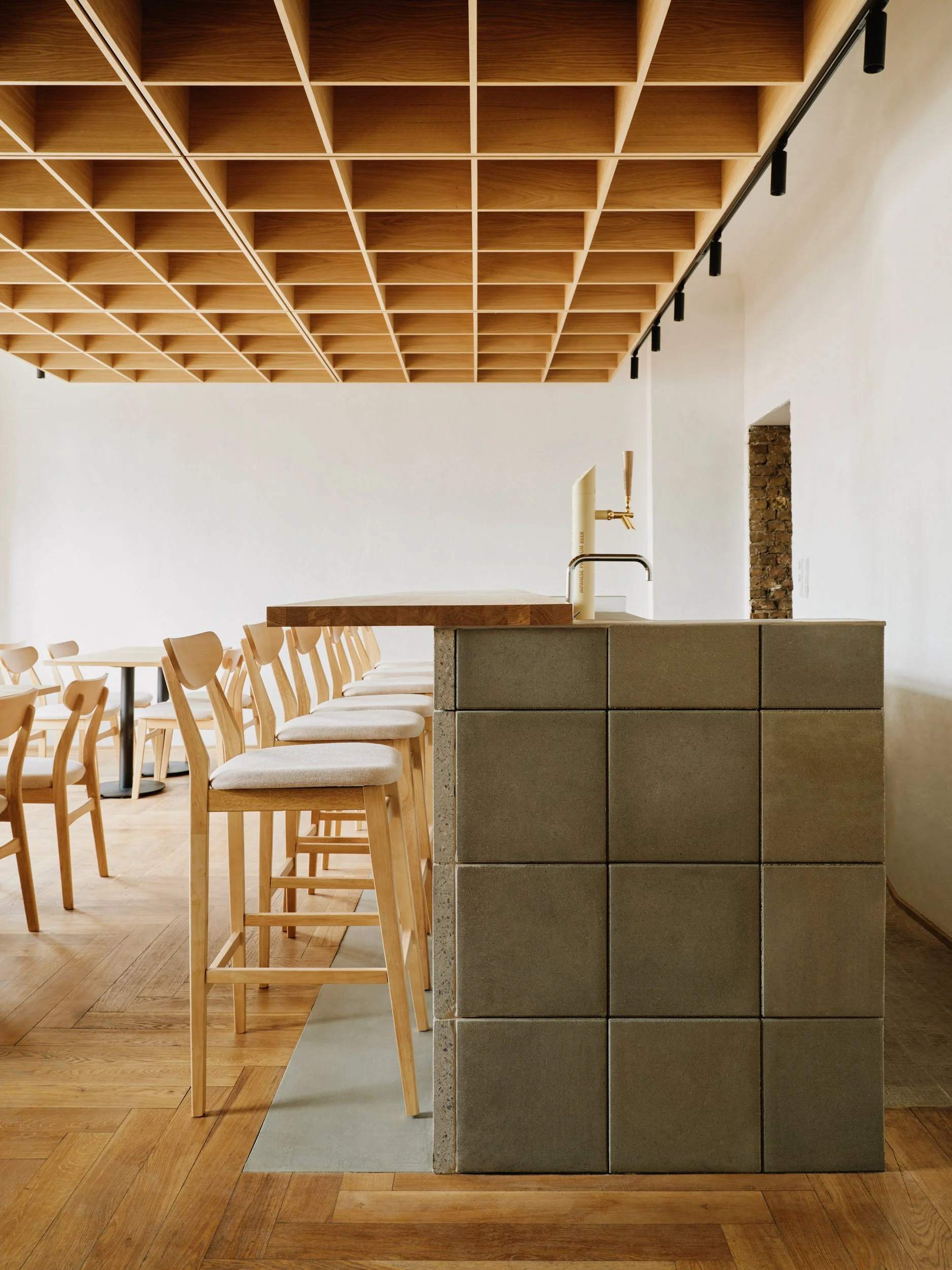
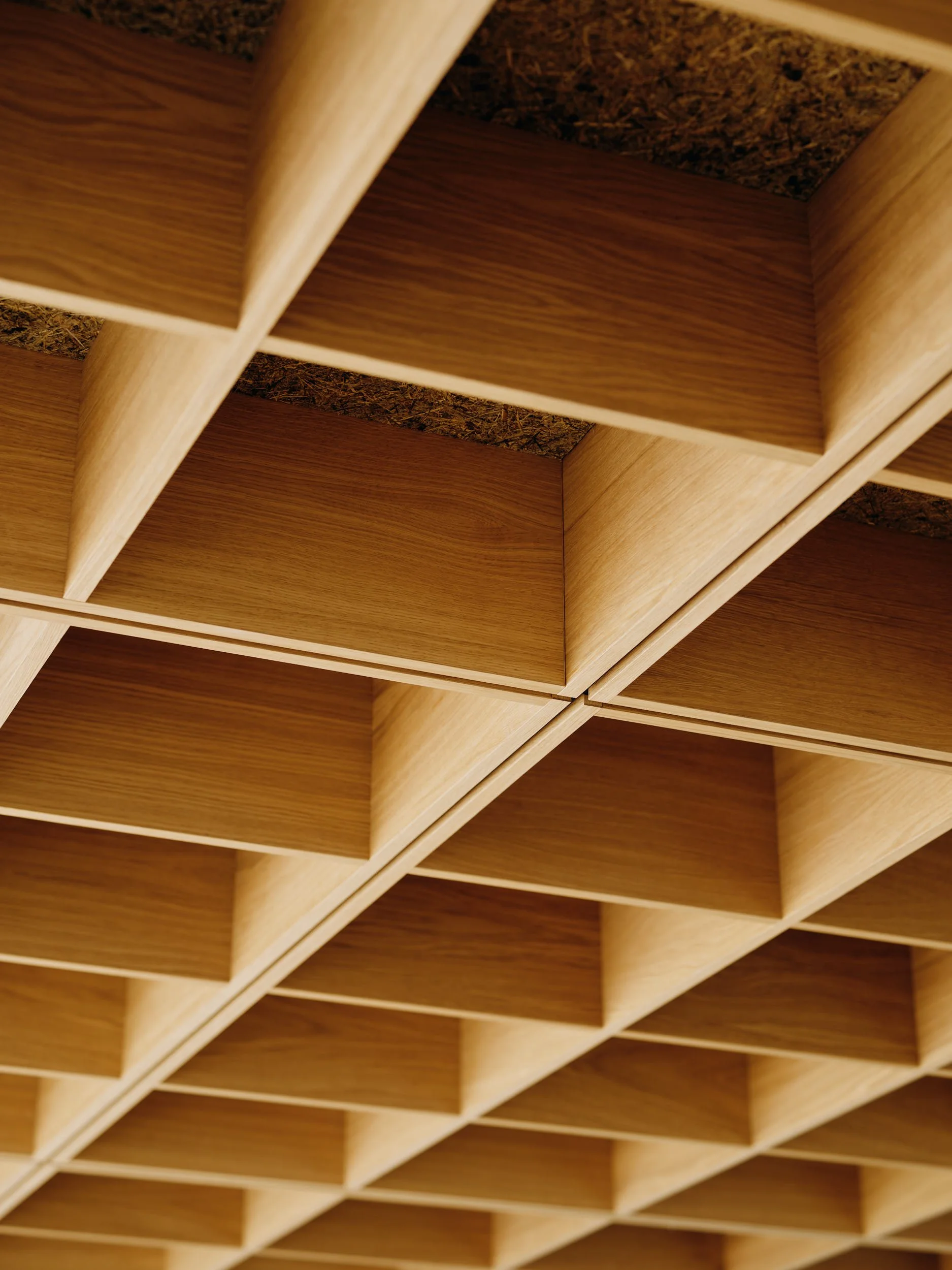
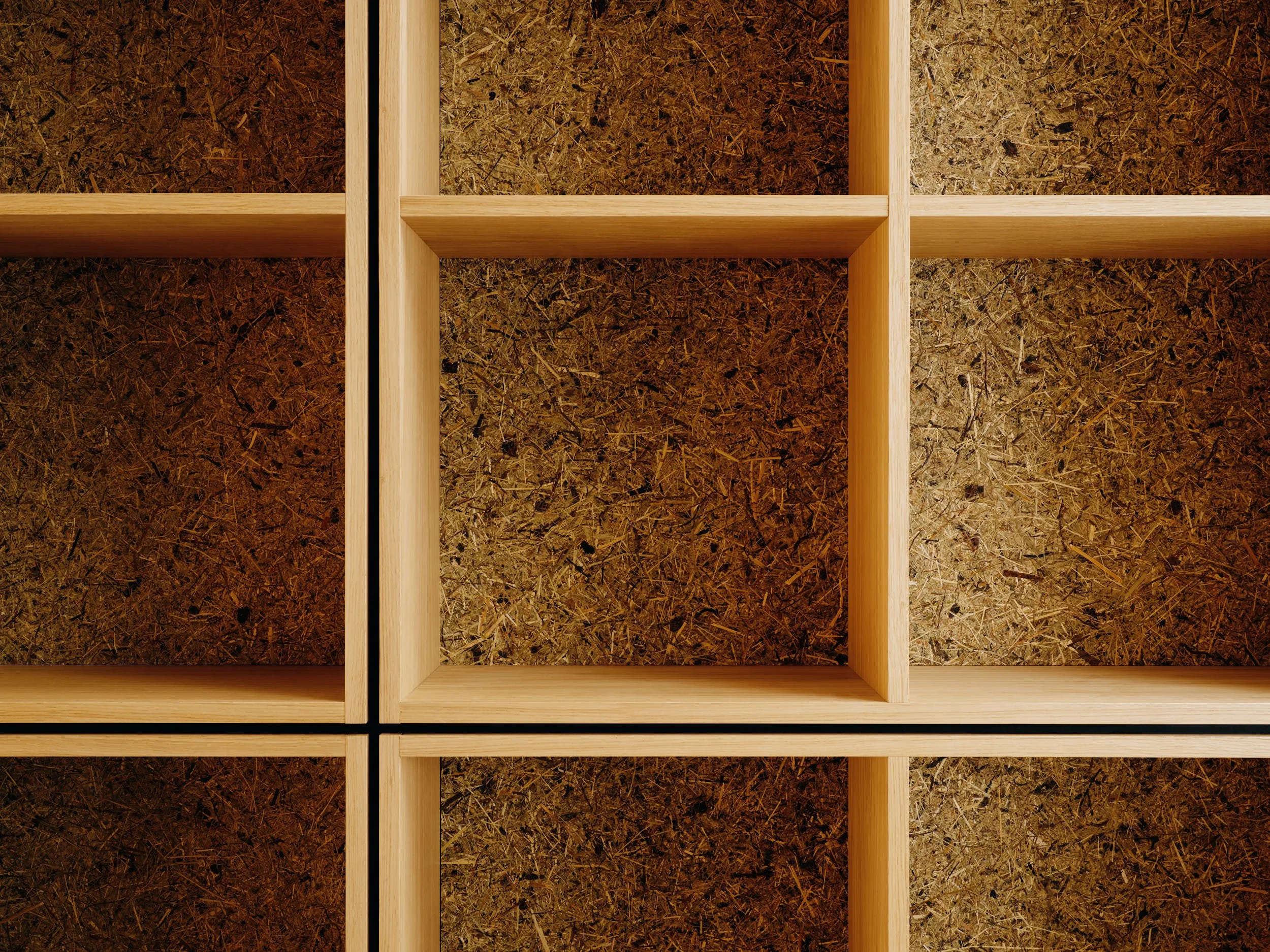
この空間の特徴のひとつが、木製の格子天井である。奥行きのある格子と素材感のある天板によって構成された天井は、単純な反復による広がりを持ちながら、高さを低く抑えることで包まれるような感覚を生み出している。連続する格子は普遍的な広がりを与えると同時に、光に反応して表情を変える天板の素材と相まって、まるで枝を広げた大きな樹木の下にいるかのような感覚をもたらす。それは囲まれている安心感であり、空間を共有し、繋がっているという感覚である。ここで生まれるのは、人と人とが直接向き合わずとも成立する、適切な距離感と安心感を保ちながら、将来の多様な可能性に開かれた「事物を通した人と人との関係性」である。
本計画では「おにぎり」と「結ぶ」ことをキーワードに、建築や空間における現代的な「関係性」について考えた。テクノロジーの発展によって建築の存在感が相対的に希薄になりつつある現代においても、物質と身体を媒介として関係性を編み直すことのできる場として、建築固有の可能性をあらためて感じさせる経験となった。
Tokyo Gohan is a project centered on onigiri, seeking to “connect” Japan and the wider world through its food culture. For this project, I joined as the interior designer for the renovation of the second Tokyo Gohan restaurant, located in Berlin’s Friedrichshain district. The surrounding area is characterized by a dense fabric of Altbau buildings—pre-war residential blocks that define much of the neighborhood. The site itself occupies one such building, facing a generous public square. Along the street, a sequence of shopfronts creates a rhythmic urban façade that contributes to the spatial identity of the district. Prior to renovation, the space had been used as a bar, and the complete redesign of the guest area became the central condition of the project. The main requirements included the organization of seating areas composed of counters and tables, the integration of a takeaway counter, the introduction of a small tatami room, and the careful balance between visual unity and spatial differentiation. Equally important was the clarification of circulation within the space.
As these requirements were distilled, the overarching concept of “connecting”—a core theme of the Tokyo Gohan project—became the foundation of the design approach. Connecting, in this sense, can be understood as relationships. In contemporary society, relationships are often mediated through online networks: abstract, largely detached from physical presence, and valued primarily for the fact of connection itself rather than for embodied experience. Approaching the idea of connection through architecture, this project sought to re-examine material and bodily relationships within a context saturated by online connectivity. From this perspective, the spatial concept was developed around three axes: The relationship between objects, the relationship between objects and people, and the relationship between people mediated through objects.
In addressing the relationship between objects, priority was given to respecting the inherent presence of materials themselves, arranging them in a simple and appropriate manner. This approach finds an analogy in the onigiri: composed of minimal ingredients whose subtle differences generate a wide range of sensory experiences. Such simple yet nuanced relationships between elements lend the space an organic depth and a quiet richness.
For Japanese people, onigiri is among the most familiar foods—a primordial experience in which a simple form and a few basic ingredients connect directly with the body. Through repetition, this fundamental relationship gains depth, allowing one to perceive continuity and change within one’s own sensory experience. It is precisely this simplicity that enables such a layered relationship to emerge. When considering the relationship between objects and people, the most significant focus of this project is the relationship between onigiri and the human body. Architectural elements are therefore conceived as a background presence. Material textures, ceiling height, and spatial scale are carefully calibrated to allow an intensified, focused interaction between object and person. Over time and through repeated experience, spatial materiality gradually emerges from the background—an intentionally restrained physical presence that reveals itself only through use.
One of the defining features of the space is the wooden lattice ceiling. Composed of deep wooden grids and textured ceiling panels, it creates a sense of continuity through repetition while maintaining a relatively low height, producing an enveloping spatial atmosphere. The rhythmic lattice offers a universal sense of extension, while the material surface responds subtly to light, evoking the sensation of sitting beneath the spreading branches of a large tree. This atmosphere fosters a feeling of being gently held—of sharing space and being connected. Here, a relationship between people mediated through objects emerges: one that does not require direct confrontation, yet maintains an appropriate distance and sense of comfort. It is a relationship open to multiple future possibilities, quietly supported by material presence.
Through the act of connecting with onigiri, this project reflects on contemporary notions of relationship in architecture and space. Even as the physical presence of architecture risks becoming increasingly diluted by technological advancement, this experience reaffirmed architecture’s unique capacity to reweave relationships—through materiality and the human body—as an irreplaceable spatial medium.
Tokyo Gohan
Location: Berlin, Germany Status: Completed Area: 100㎡ Program: Restaurant Date: 2025 Photo: David Frank